
This year is the sixtieth anniversary of the Black Power movement. I dedicate these words to God, my black ancestors, to black people, and well-meaning people of every color. A lot has gone on historically since that time being filled with progress and the regression of our God-given rights as black people (from many of our voting rights suppressed, the whitewashing of black museums, and the attacks of legitimate DEI programs). We witnessed many triumphs and setbacks. To start, our history as black people is filled with resiliency. We are the first humans on this Earth who originated from the Motherland of Africa, as Black is Beautiful. We made advanced civilizations all over the continent of Africa from Kush, Ghana, Mali, and to Songhai. Later, white racists (along with traitors which made up a minority of black people in Africa) used the Maafa to murder, rape, abuse, split families, eliminate cultures, eliminate religious traditions, and assault black people in a vicious fashion. Black people fought back against the Maafa and oppression in general in the Motherland of Africa, in the ships, in the Americas, and worldwide for liberation. Our ancestors lived to see the end of the Maafa, the end of the American Civil War (that resulted in the defeat of the Confederate enemy in 1865), Reconstruction (with the first time that black people had political office federally in America), and Jim Crow apartheid. Advocacy of Black Power existed long before 1966. Richard Wright, a black author and social activist, wrote about Black Power in the 1950s. Kevin K. Gaines, W.E.B. DuBois, Paul Robeson, Julian Mayfield, Ida B. Wells, Booker T. Washington, and people spoke about black empowerment and black self-determination. Malcolm X fought for black liberation and black independence too. Malcolm X promoted Black Nationalism and wanted to be more revolutionary by 1965 (in questioning his own definition or labeling of Black Nationalism by 1965). Robert F. Williams of Monroe, North Carolina wanted African Americans to promote self-defense against racist terrorism back in the 1950s and early 1960s. The Civil Rights Movement (made of black people and people of all colors) fought hard to allow the 1964 Civil Rights Act and the 1965 Voting Rights Act to exist as a way to combat racial discrimination and oppression.
There was progress in the 1960s, but many reforms weren't readily sent to the grassroots, poor, and working-class black Americans. In the West (during the 1965 Watts rebellion in Los Angeles), the Midwest, and the North, civil rights legislation already existed in various states by the 1960s. Yet, those regions had de facto segregation or segregation by custom or unwritten rules filled with educational issues, health issues, economic injustices, widespread discrimination, high unemployment, underemployment, housing restrictions (which is why activists inspired Congress to pass the Fair Housing Act in 1968 to combat housing discrimination), and other problems. SNCC started to move from using nonviolence as a way of life to promote the revolutionary principle of self-defense. SNCC stands for the Student Nonviolent Coordinating Committee, which was created at Shaw University (in April 1960), an HBCU. Ella Baker was the Mother of SNCC, and SNCC followed her philosophy of promoting grassroots, decentralized, and democratic activism to promote freedom for black people. These are the roots of the Black Power movement. Many Black Power advocates viewed the civil rights reforms as being too limited and not comprehensive enough to establish true black freedom. Congressional leader Adam Clayton Powell gave a 1966 speech at Howard University (a well-known HBCU) to promote Black Power as an audacious way to set up own institutions. This has inspired Kwame True to call for Black Power in public in Greenwood, Mississippi, by 1966. Kwame Ture was born in Trinidad, raised in New York City, and was part of SNCC. Kame Ture wanted nonviolence to be used as a tactic, not as a way of life. Then, James Meredith was shot after he protested for justice on June 6, 1966. So, Dr. King, Kwame Ture, Cleveland Sellers, Floyd McKissick, the armed Deacons for Defense and Justice, CORE, SNCC, the MFDP, MCHR, etc. joined to promote the March Against Fear to defend James Meredith (and the human rights of black people). NAACP's Roy Wilkins left the march, because he disagreed with the Deacons for Defense and Justice protecting the protesters with arms. Whitney Young left the march too over ideological reasons in his disagreements with Kwame Ture. The people of the March Against Fear marched in the South in Mississippi. Marchers of all colors chanted Freedom Now! Kwame Ture was pushed by one police officer unjustly. Ture was about to swing at the officer, and Dr. King held Ture's arm to prevent him from doing it. The march continued. Dr. King and Kwame had a respectful disagreement on tactics, not on the goal of equality and justice for black people. Both men were friends, and Dr. King mentored Kwame Ture (Kwame Ture cried when he heard the news of Dr. King's assassination). At night, Kwame Ture gave a speech in favor of Black Power in 1966 after protesters were hit with gas weapons at Greenwood, Mississippi. This development was shown worldwide. Many marchers chanted Black Power!
The Black Power movement was born, and it branched off into 3 major groups. One group was more progressive like the Black Panthers who had economically progressive views and wanted opposition to imperialism and colonialism (including their opposition to the Vietnam War). The conservative side of Black Power advocates wanted basically black capitalism, private wealth and equity growth, and many supported conservative Republicans like Richard Nixon. By the 1970s, CORE switched to be more conservative than initially being more liberal. The third major faction of the Black Power movement are cultural nationalists who were apolitical and wanted black African culture to be used a means to cause true liberation. The moderate NAACP (in 2026, the NAACP is much more progressive now) leadership back then (and some liberals) condemned Black Power as racist and compared it to the Klan, which is an old slanderous lie. The concept of Black Power desired black self-determination, love of justice, growth of black institutions, love of Blackness, and a belief in black independence. The Klan advocated violence including lynchings against innocent black people (and others), Jim Crow apartheid (which is evil and antithetical to black liberation), rape, violence, burning churches, the false view of racial inferiority of black people, and bigotry. Roy Wilkins at the 1966 NAACP Annual Convention in Los Angeles condemned Black Power and challenged SNCC and CORE on its advocacy of it. The NAACP believed in integration in a pluralistic society. The NAACP leadership back then labeled Black Power as "black racism." Dr. Martin Luther King Jr. had a more nuance view of Black Power. Dr. King wanted actions beyond just slogans. He believed in Black Power's advocacy of self-determination to oppose domestic colonialism, and Dr. King believed in the growth of black owned institutions. Yet, Dr. King rejected separatism. He felt that some people may have the connotation of Black Power being in league with violence when that isn't the case. Dr. King saw that Black Power existed as justified cry and hurt at the failure of American society to deliver on civil rights (as said in his address at the SCLC staff retreat at Frogmore, South Carolina on November 14, 1966). Dr. King agreed with amassing black political and economic power, but it must go beyond a slogan. True Black Power never advocated unjust violence. His views are shown in his classic, outstanding 1967 book called "Where Do We Go From Here: Chaos and Community?" Dr. King was right to say, "Yes, I'm Black, I'm proud of it, I'm Black and I'm Beautiful." Dr. King correctly predicted that the growth of automation (and now, we have A.I.) will harm some jobs via massive deindustrailization plus a rapidly changing economy, so we need a radical redistribution of political and economic power to help workers. Some wanted a Freedom Budget as promoted by A. Philip Randolph which was a massive federal program for the poor, and Dr. King wanted the Poor People Campaign to eliminate poverty from American society. Dr. King and Whitney Young had a debate on the Vietnam War. Whitney Young said to Dr. King on March 6, 1967, at a party that his actions will harm LBJ on his civil rights program. Dr. King to Whitney Young that you may receive a government grant, but you won't be in the kingdom of truth. Ironically, Whitney Young would oppose the Vietnam War in 1969, because he felt that the war diverted essential funding from domestic anti-poverty programs.
The Black Power movement continued to grow to oppose the Vietnam War, to support the 1968 Olympic protests in Mexico City (with Tommie Smith and John Carlos raising their fists in the air to demand human rights for black people), and saw a revolutionary outlook on life socially and culturally. For example, by 1966 and beyond, more black Americans wore cornrows, had Afros, chosen African first and last names, embraced their African heritage more, wore African inspired clothing, and displayed more confidence about their black heritage. Cicely Tyson wearing cornrows, Muhammad Ali displaying confidence, and James Brown showing funk represent black cultural power in action. Tons of black women were in the Black Power movement or embraced many of its principles like Angela Davis, Kathleen Cleaver, Ericka Huggins, Mae Mallory, Gloria Richardson, Frankye Adams-Johnson, Katherine Durham, Nikki Giovanni, and Miriam Makeba.
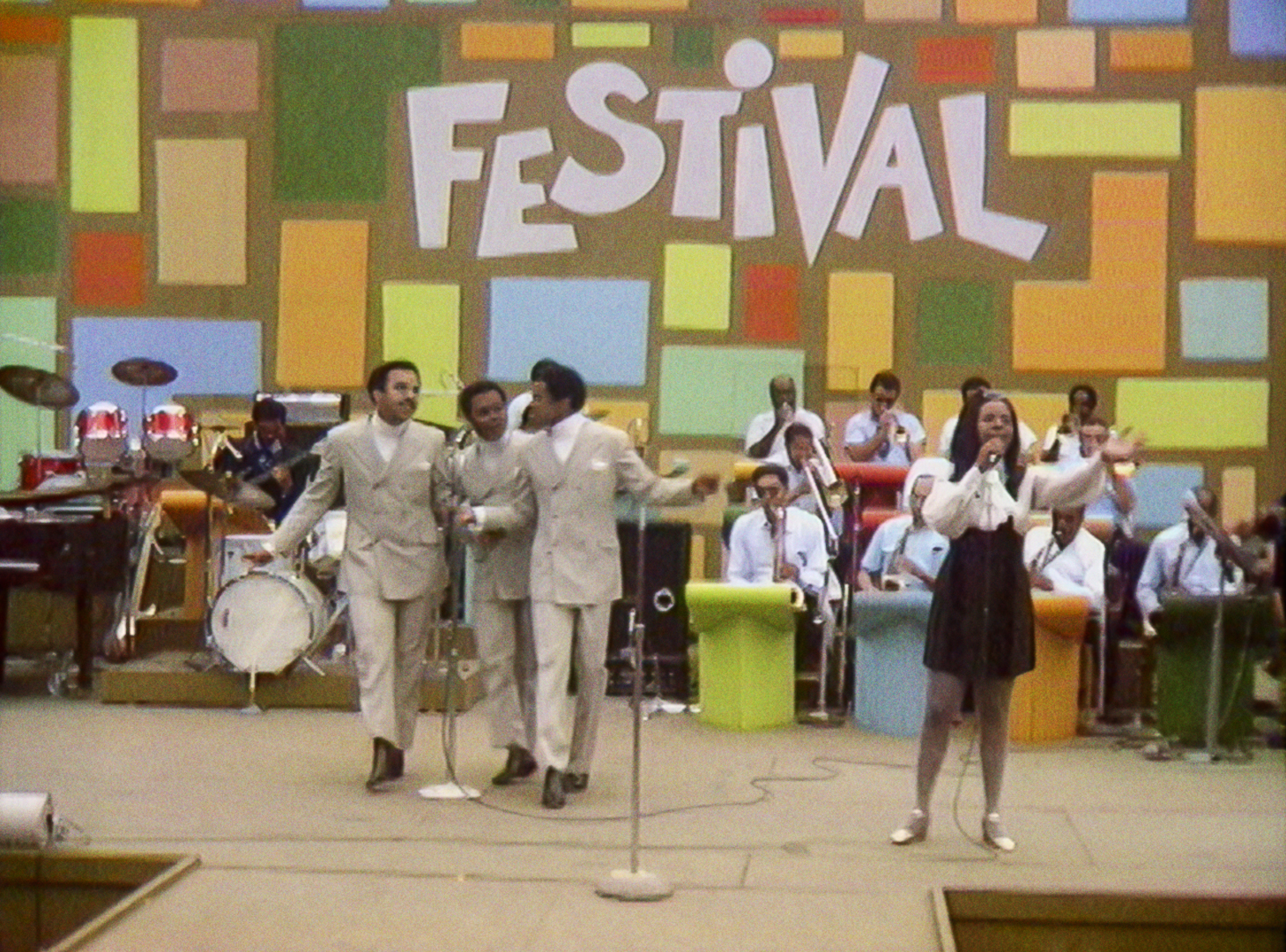
Fundamentally, power is the ability of human beings to establish their own destinies economically, socially, culturally, and politically without overt oppression. Also, power is about self-determination and pure, unadulterated independence. It is important to realize that there is no true power without environmental justice, universal health care, voting rights, human rights, an end to imperialism, educational opportunities, and the progressive growth of society collectively. There is no freedom without a clean environment, health inequalities gone, and the system of white racism eliminated from the Universe. Selfish individualism is folly as we need a community to grow power comprehensively. We are not islands on our own. We want economic justice with living wages, the right to form a union, no tax breaks for the super wealthy, and an end to poverty without disrespecting the poor or marginalized people. Black Power is the psychological embrace and love of our Blackness and the power of black people to establish their own freedom via self-determination without apology. We reject bigotry as Hoteps exploit the legitimate concepts of Black Power to advance sexism and bigotry in general which we all oppose vehemently. I believe in Pan African unity forever. The Black Power movement was the inevitable powerful revolution and evolution in the black freedom struggle that allowed tons of black people to gain confidence, power, and a revolutionary mindset to achieve human excellence.
Now, you know the story of the Black Power movement on its 60th year anniversary.
By Timothy

No comments:
Post a Comment